
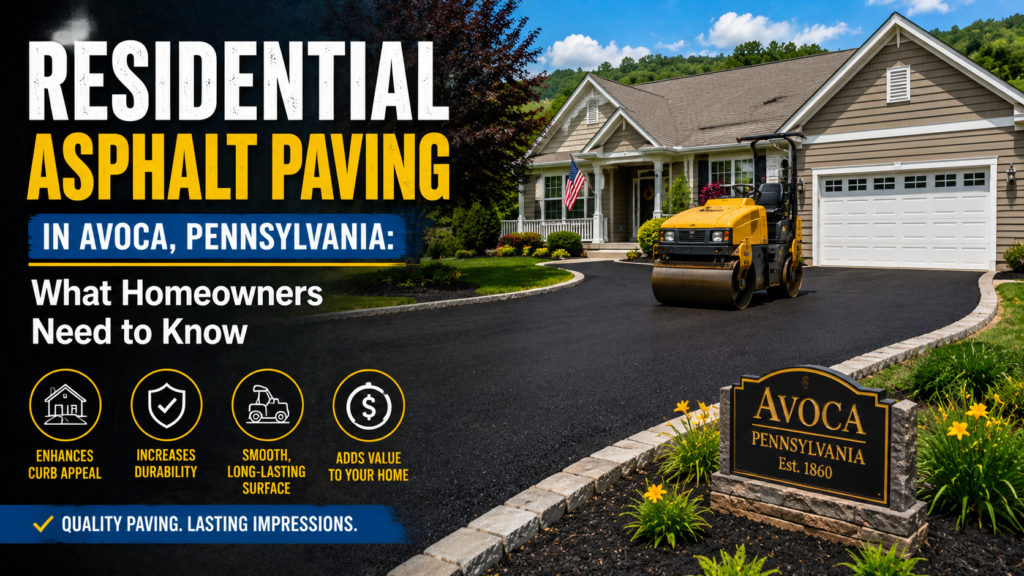
Avoca, Pennsylvania a borough in Luzerne County near Scranton in the heart of Northeastern Pennsylvania sits in one of the most asphalt-demanding climates in the eastern United States. The region’s winters are long and harsh, with freeze-thaw cycles that relentlessly test every paved surface. For homeowners in Avoca and the broader Lackawanna-Luzerne region, asphalt is the dominant Residential Asphalt Paving Avoca material, and for good reason: it performs well in cold climates, withstands the freeze-thaw movement that cracks rigid concrete, and can be maintained and repaired at reasonable cost throughout its service life.
Why Asphalt Dominates Residential Paving in Northeastern Pennsylvania
The choice of asphalt over concrete for residential driveways in Avoca is driven primarily by climate. Pennsylvania’s freeze-thaw cycles are among the most punishing in the country for paved surfaces. When water infiltrates cracks in a rigid concrete surface and then freezes, it expands with enough force to widen those cracks dramatically. Concrete, once cracked, is difficult and expensive to repair aesthetically. Asphalt, by contrast, is flexible it accommodates minor ground movement without cracking as readily, and when damage does occur, it can be patched, filled, or resurfaced in ways that blend with the original surface.
Asphalt also reaches usable condition faster than concrete after installation typically 24 to 48 hours compared to several days for concrete curing. In a climate where weather windows for construction are limited, this faster turnaround is a practical advantage.
What Residential Asphalt Paving Involves
A properly installed residential asphalt driveway in Avoca is not simply asphalt laid on top of the ground. It is an engineered system built in layers, each serving a specific structural function:
- Site preparation: The project area is excavated to the required depth typically 8 to 10 inches total from finished grade removing existing material and establishing a stable sub-grade. Any soft spots, organic material, or drainage problems are addressed during this phase.
- Sub-base installation: A layer of compacted quarry process aggregate or crushed stone, typically 4 to 6 inches deep, is spread and compacted. This layer provides load distribution, drainage, and frost protection by creating a stable platform that accommodates seasonal ground movement.
- Tack coat (for overlays): When paving over an existing surface rather than replacing it entirely, a thin asphalt emulsion is applied to promote bonding between the existing and new layers.
- Asphalt surface course: Hot mix asphalt typically 2 to 3 inches of compacted surface course is spread by a paver and compacted with a steel roller. The result is a dense, smooth surface that bonds to the sub-base and provides the wearing surface.
- Edging and finishing: Driveway edges are shaped and compacted to provide clean, defined borders that resist crumbling.
The Importance of Base Preparation in Avoca’s Climate
In Northeastern Pennsylvania, the quality of the sub-base beneath any asphalt surface is the primary determinant of how that surface performs over time. The frost line in the Avoca area typically penetrates 36 to 42 inches below grade in severe winters. Ground movement from freeze-thaw cycling acts directly on poorly prepared sub-bases, creating heaving, cracking, and surface failure that cannot be corrected by surface maintenance alone.
A properly installed aggregate base provides two critical functions: it distributes vehicle loads over a larger area of sub-grade (preventing point loading that causes rutting), and it provides drainage within the pavement structure (preventing water from saturating the sub-grade and weakening it). In Avoca’s clay-influenced soils, where natural drainage can be limited, this engineered drainage within the base layer is particularly important.
Sealcoating: Protecting the Investment
Once a residential asphalt driveway is installed in Avoca, sealcoating is the most important ongoing maintenance practice. Sealcoating applies a coal tar or asphalt emulsion-based protective layer over the asphalt surface that:
- Blocks UV radiation from oxidizing and hardening the asphalt binder.
- Seals small surface cracks before they admit water.
- Protects against petroleum product spills that degrade asphalt binder.
- Restores the rich black appearance of fresh asphalt.
In Avoca, new asphalt should be sealcoated approximately 6 to 12 months after installation (after the surface has cured and minor initial cracks have been filled) and then every 2 to 3 years thereafter. Sealcoating should be applied when temperatures are above 50 degrees Fahrenheit and the surface is fully dry late spring through early fall in Avoca.
Crack Filling: Addressing Damage Before It Spreads
Even well-installed and properly maintained asphalt driveways in Avoca will eventually develop surface cracks typically from UV oxidation, seasonal temperature cycling, or sub-grade movement. Addressing cracks promptly is critical in Northeastern Pennsylvania’s climate: water infiltration through cracks, followed by freezing, rapidly enlarges those cracks and can cause base failure.
Crack filling involves cleaning existing cracks of vegetation and debris and filling them with a flexible, rubberized asphalt filler that accommodates the seasonal movement of the pavement without re-cracking. When performed as part of a regular maintenance program alongside sealcoating, crack filling can extend an asphalt driveway’s service life by many years before resurfacing or replacement is required.
Signs That Residential Asphalt Needs Attention
Homeowners in Avoca should watch for these indicators that their asphalt driveway needs professional attention:
- Alligator or fatigue cracking: A pattern of interconnected cracks resembling alligator skin indicates base failure and typically requires resurfacing or replacement of the affected area.
- Potholes: Full-depth failures that occur when cracked, saturated base material collapses under vehicle load. Pothole repair should be addressed promptly to prevent enlargement.
- Gray, oxidized surface: Loss of the black color indicates significant UV oxidation the binder is hardening and the surface is becoming brittle. Sealcoating should be applied before cracking begins.
- Drainage problems: Standing water on the driveway surface after rain indicates grade changes from settlement or insufficient slope during installation. Addressing drainage problems before they cause base damage is essential.
Conclusion
Residential asphalt paving in Avoca is a significant investment that, when properly installed and maintained, provides decades of reliable service. Understanding the layered system that makes up a quality asphalt driveway, the role of climate in how that system must be designed, and the maintenance practices that extend its service life empowers Avoca homeowners to make informed decisions and protect the value of their paving investment through every Pennsylvania winter.