
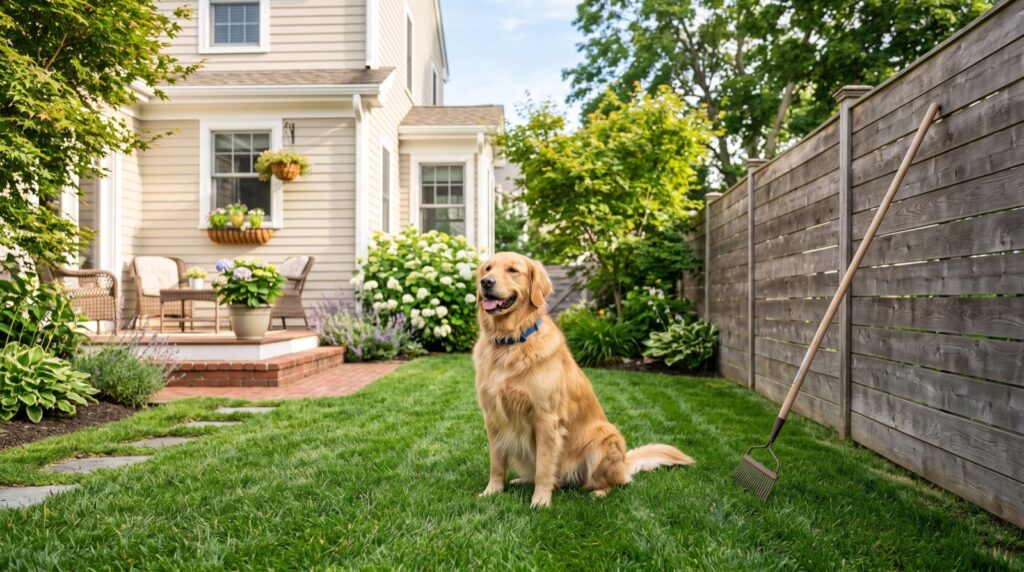
Snow is the great procrastination enabler of dog ownership. Piles disappear under December powder, January adds another layer, and by the time March sunshine arrives, the average northern backyard reveals three months of frozen archaeology all at once. Veteran owners call it the spring thaw surprise, and the cure is a cold-weather system: Heavy duty trash bags that stay flexible below freezing, a tool that lifts waste off ice without chipping, and a calendar that never lets the backlog form.
This seasonal playbook covers all four quarters of the yard-cleanup year, because winter neglect creates spring problems, spring rain creates summer smells, and autumn leaves hide everything. Follow it through 2026 and next March will be just another month.
The Freeze-Thaw Problem Nobody Warns New Owners About
Cold does not sterilize dog waste. Parasite eggs survive freezing easily, entering a dormant state and reactivating the moment soil warms. Every pile that overwinters in your yard emerges in spring as biologically active as the day it landed, now soggy, spreading, and sitting exactly where the first barbecue of the year wants to happen.
Meltwater makes it worse. Snowmelt is a concentrated runoff event, flushing an entire winter’s accumulation toward storm drains in days. The EPA identifies pet waste among the nutrient sources degrading US waterways, and late-winter melt is when a neglected yard contributes most.
Winter Scooping: Gear That Works Below Freezing
Standard plastics turn brittle in the cold, and squeeze-hinge scoopers are the first casualties, snapping at the pivot on a ten-degree morning. Bags behave differently too, with thin films cracking instead of stretching.
Cold-rated equipment checklist
- A one-piece tool body with no springs or hinges to freeze or shatter.
- Thick liner bags that stay pliable in sub-freezing temperatures.
- A flat working edge that slides between frozen waste and packed snow.
- Insulated gloves with enough dexterity to knot a bag closed.
Frozen piles are honestly easier to lift than fresh ones, which is winter’s single gift to dog owners. Get out within a day of each snowfall and the job takes minutes.
How Do You Handle the Spring Thaw Cleanup?
If the backlog already exists, attack it in stages rather than one heroic afternoon. Partially thawed waste is the worst possible texture, so timing matters more than muscle.
- Start on a morning below 40 degrees while piles remain firm.
- Grid the yard into quadrants and finish one completely before moving on.
- Bag as you go, sealing each quadrant’s collection separately to control weight.
- Flag any spots the dogs favored all winter and flush them with a hose once cleared.
- Wait two weeks, then reseed the dead patches the melt exposed.
For yards past the point of DIY, professional scoop companies book out fast every March. The logistics mirror any temperature-sensitive operation, and just as warehouses rely on reputable service experts to manage goods across climate zones, a good scooping crew knows exactly which week your region’s thaw makes cleanup fastest.
When to call in reinforcements
A season’s worth of buildup across a half-acre lot can mean two hundred piles or more, and that is a legitimate reason to outsource the reset. One-time recovery visits from local scooping companies typically run $80 to $160 depending on lot size and severity, then you take over maintenance with your own gear. Paying once to reach zero is often the difference between a routine that sticks and one that never starts.
Your Four-Season Yard Cleanup Calendar
| Season | Frequency | Main challenge | Key tactic |
|---|---|---|---|
| Winter | After each snowfall | Buried and frozen piles | Scoop while frozen solid |
| Spring | Every 2 days | Thaw backlog, mud | Quadrant sweeps, reseed burns |
| Summer | Daily | Odor and flies | Morning pickup before heat |
| Fall | Every 2 days | Leaves hiding waste | Rake first, then scoop |
Autumn: The Sneaky Season
Leaf cover turns October yards into minefields. Rake or blow leaves into rows before scooping, then run your pickup pass along the cleared lanes. Waste raked accidentally into leaf piles contaminates bagged yard debris, which many municipalities compost, so keeping the streams separate genuinely matters.
Fall is also restock season. Order winter’s bag supply and inspect your tool before the first freeze, because December is a miserable month to discover a cracked handle. Having a spare Pooper Scooper nearby in the garage means a mid-January failure never pauses the routine.
Summer Heat Changes the Rules Again
July operates on compressed timelines. Odor develops within hours, flies find fresh piles in minutes, and afternoon sun bakes everything onto the grass. Shift pickup to early morning, hose the favorite spots weekly, and store sealed bags in a shaded bin, never against a sun-hit fence.
Hydrate the lawn strategically too. Deep watering dilutes the nitrogen concentration at old waste sites, which reduces the burn spotting that peaks during 2026’s hottest weeks. If your region runs watering restrictions, prioritize the relief zone and the shade line where dogs rest, since those two areas take the heaviest biological load all summer.
Frequently Asked Questions
Does freezing kill the bacteria in dog poop?
No. Freezing pauses microbial activity rather than ending it, and hardy parasite eggs like roundworm survive multiple freeze-thaw cycles. Winter waste is dormant, not dead.
Should I scoop when there is snow on the ground?
Yes, after each snowfall if possible. Fresh waste sits visibly on top of new snow for a day or two, making winter pickup the easiest of the year if you stay current.
What do I do with waste bags when the outdoor can is frozen shut?
Pour warm water around the lid rim to free it, then coat the seal with a little cooking spray to stop refreezing. As backup, keep a lidded bucket in the garage for a day or two of sealed bags.
Why does my yard smell worse in April than in August?
The thaw releases an entire winter of accumulated waste odor within a couple of weeks, all while soil stays too wet to absorb anything. Clearing the backlog and hosing hotspots resolves it within days.
Conclusion: Beat the Thaw Before It Starts
Seasonal cleanup is a rhythm, not a rescue mission. Stock heavy duty trash bags before winter arrives, scoop after every snow, and spring becomes the season of grilling instead of regretting. Set up your cold-weather kit this week, because the next front is always closer than it looks.